
A Beginner's Guide to Gambling Licences: UKGC, MGA, GGL and Curaçao Compared (and How to Verify One)
A gambling licence is the one thing every legitimate operator has and every unlicensed one lacks, but not all gambling licences mean the same thing. If you are searching for "which gambling licence is best", "is a Curaçao licence safe", "UKGC vs MGA" or "how to check if a casino is licensed", this beginner's guide answers all four.
We cover what a licence actually requires from an operator, the regulators you will meet most often, our four-tier classification, why "currently active" matters more than "licensed" and a step-by-step way to verify a licence yourself.
At a glance · Updated October 2026
Gambling licences at a glance
- UKGC
- MGA
- GGL
- Curaçao
- Kahnawake
The short answer
A real licence forces an operator to segregate player funds, pass owner background checks, run independently tested games, offer a regulator-backed dispute process and follow anti-money-laundering rules. The UKGC is widely considered the strictest major regulator, the MGA is the most common for EU-facing operators, and the GGL regulates the German market; Curaçao historically tells you less. Always verify the licence on the regulator's own register.
A gambling license is the one thing every legitimate operator has and every unlicensed one doesn't — but not all licenses mean the same thing. This guide covers what a license actually guarantees, how the major regulators differ, and how to check whether an operator's license is real and currently active before you deposit anywhere.
What a Gambling Licence Actually Requires an Operator to Do
Getting licensed isn't a formality — a real regulator requires an operator to demonstrate, before it can operate at all, that it:
- Holds player funds in accounts segregated from its own operating capital, so the company's cash flow problems can't touch your balance.
- Passes background checks on its owners and key staff, including source-of-funds checks.
- Runs fair, independently tested games — reputable licenses require RNG and payout-percentage audits from labs like eCOGRA or iTech Labs.
- Provides a formal, regulator-backed dispute process — so if an operator refuses a legitimate withdrawal, you have somewhere to escalate beyond the operator's own support team.
- Follows anti-money-laundering (AML) rules, including identity verification (KYC) before large withdrawals.
An unlicensed site can promise all of this in its own terms and conditions — but there's no external body checking whether it actually does any of it, and no regulator to complain to if it doesn't.
The Gambling Regulators You'll Actually See: UKGC, MGA, GGL, Curaçao and Kahnawake
Licenses vary a lot in how strict they are. Based on the licenses we track across the operators on this site, here are the ones you'll run into most:
- UK Gambling Commission (UKGC) — widely considered the strictest major regulator. Mandatory affordability checks, strict advertising rules, and one of the few regulators with real enforcement teeth (fines routinely run into the millions of pounds, and licenses do get suspended). If you're in the UK, a UKGC license is close to non-negotiable.
- Malta Gaming Authority (MGA) — the most common license for operators serving the EU and much of the rest of the world. Solid player-protection requirements and real enforcement, though historically less aggressive than the UKGC on advertising and affordability specifically.
- Germany's Gemeinsame Glücksspielbehörde der Länder (GGL) — Germany's relatively new joint state gambling authority, with strict rules specific to the German market (deposit limits, stake limits on slots, and a nationwide self-exclusion database — OASIS — that every licensed operator must check).
- Curaçao eGaming — historically the most lenient widely-used license, and until 2023 issued through a "master license" sub-licensing system with limited central oversight. Curaçao's regulatory framework has been getting stricter, but a Curaçao license alone still tells you less than a UKGC or MGA one — it's not automatically a red flag, but it means we weight other signals (payout history, complaint patterns) more heavily when scoring an operator that only holds one.
- Kahnawake Gaming Commission — one of the oldest online gambling regulators still active, based in the Mohawk Territory of Kahnawake in Quebec, Canada, and operating since the 1990s. It sits between the top-tier and overseas categories in practice: real licensing standards and a genuine track record, but without the same consumer-facing enforcement apparatus (affordability checks, published fines) as the UKGC or MGA.
Our Four-Tier Licence Classification
Rather than treat every license the same, or reduce the question to a binary "licensed or not," we classify every regulator we track into one of four tiers — shown directly on that regulator's page and factored into every operator's licensing score:
- Top-tier regulator — the UKGC, MGA, and Germany's GGL fall here: real enforcement history, meaningful player-protection requirements, and public accountability when something goes wrong.
- Established regulator — a genuine, functioning licensing body with a real track record, like Kahnawake, but without the same enforcement weight or player-protection mandate as a top-tier one.
- Overseas license — Curaçao and similar jurisdictions: a real license that requires some baseline compliance, but with limited central oversight and comparatively weak enforcement if an operator misbehaves.
- Not yet classified — a regulator we've recorded but haven't yet researched deeply enough to place with confidence in one of the other three tiers. This is an honest "we don't know yet" rather than a default assumption in either direction.
You'll see this exact classification on every licensing authority's own page on this site, and it's a direct input into the licensing dimension of Trust Score — the heaviest-weighted of the fifteen metrics that make up the overall number (see our Trust Score methodology).
Why "Currently Active" Matters More Than "Licensed"
A license isn't permanent. Regulators suspend or revoke licenses when an operator breaks the rules — and an operator that loses its license doesn't always update its own website to say so. This is the single most common way an otherwise-legitimate-looking site turns out to be a problem: it was properly licensed once, something changed, and the license page still shows the old badge.
That's why every operator's Trust Score on this site weighs current license standing (weight 2.0, the heaviest single factor in the score — see our Trust Score methodology) rather than whether it was ever licensed. A suspended or expired license drags the score down hard even if every other metric looks fine, because it's the one thing that changes what happens if something goes wrong with your money.
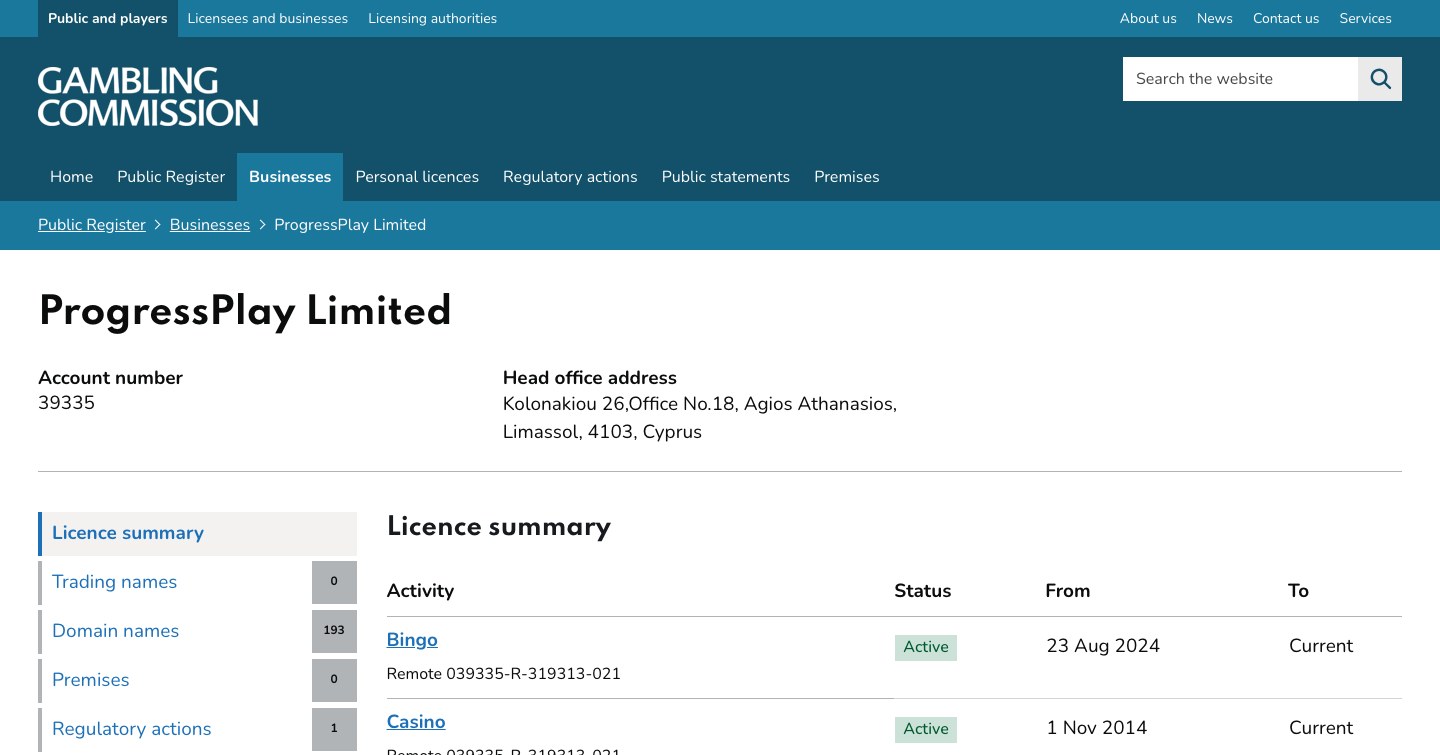
A badge in the footer is a claim, not proof. Open the regulator's register, confirm the licence is active and confirm your exact website is covered.
How to Verify a Gambling Licence Yourself, Step by Step
Every regulator publishes a public register. It takes under a minute to check:
- Find the license number on the operator's site — usually in the footer.
- Go to the regulator's own public register (search "[regulator name] public register" — e.g., the UKGC's is at gamblingcommission.gov.uk, the MGA's at authorisation.mga.org.mt).
- Search the license number or operator name and confirm the status shows active, not suspended, lapsed, or under review.
- Check the licensed entity name matches — some brands operate under a different corporate name than the one on the website, which is normal, but worth confirming it's a real match, not a mismatch.
We do this same check on every operator we list, and we link the license number directly on each operator's profile to what we've verified — but it costs nothing to double-check yourself, and it's the single highest-value thirty seconds you can spend before depositing anywhere new.
What a Gambling Licence Does and Doesn't Guarantee
It's worth being precise about what a license actually promises you, because it's easy to over-read it in either direction:
- It does mean your funds are held separately from the operator's own capital, the games have been independently tested for fairness, there's a real dispute process if something goes wrong, and someone with actual authority can suspend the operator if it breaks the rules.
- It doesn't mean the odds are good, the bonus terms are generous, the game selection suits you, or that the operator is a good fit for how you play. A UKGC license tells you the operator meets a real baseline of consumer protection — it says nothing about whether its particular sportsbook margins or slot RTPs are competitive with a rival that holds the exact same license.
In other words, a strong license is a floor, not a recommendation — the same principle behind how we treat Trust Score generally (see "What the score actually means in practice" in our Trust Score guide). It rules out a category of risk; it doesn't do your comparison shopping for you.
Gambling Licence FAQ: Common Questions Answered
Can an operator hold more than one license?
Yes, and many do — a large international operator might hold a UKGC license for UK players, an MGA license for EU players elsewhere, and a Curaçao or similar license for markets neither of those covers, showing different licenses to visitors depending on where they're connecting from.
Does a top-tier license mean an operator will never have problems?
No. Even UKGC- and MGA-licensed operators occasionally get fined or draw player complaints — the difference is that there's a real regulator to complain to, a public enforcement record you can check, and a track record of the license actually being suspended or revoked when problems are serious enough, rather than no accountability mechanism at all.
Why do some operators only list an overseas license?
Often because a top-tier license is expensive and slow to obtain, and requires the operator to accept restrictions (advertising limits, affordability checks, specific game or stake limits) it may not want to accept everywhere it operates. An overseas-only license isn't automatically disqualifying, but it's a real, meaningful difference — which is why we track it explicitly rather than treating "licensed" as a single flat category.
What should I do if I can't find an operator's license number at all?
Treat that as a serious warning sign on its own, independent of anything else about the site. A legitimately licensed operator has no reason to hide its license number — it's a badge, not a liability — and a site that omits it entirely is a much bigger red flag than one holding even the weakest tier of license we track.
Where to Go From Here
Every regulator mentioned above has its own dedicated page on this site listing which operators we've confirmed hold a license from it, its tier classification, and a direct link to its official public register — start at our full licensing authorities index if you want to check a specific regulator, or an operator's own review page if you already know which one you're looking into.
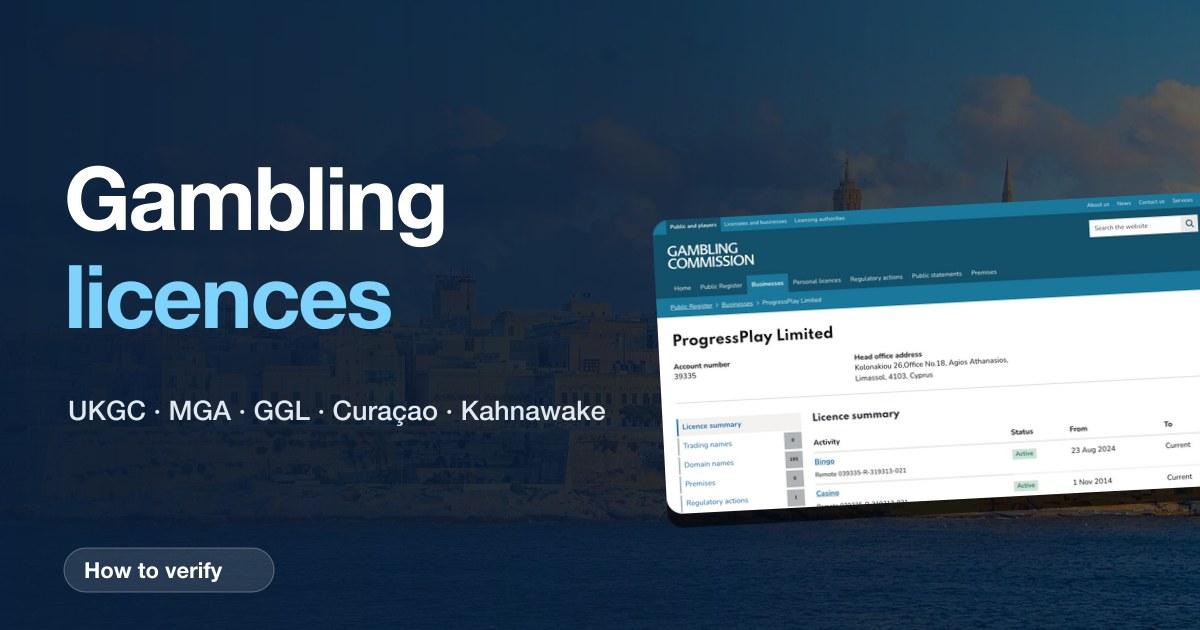
Cover image designed by AskBigBonus with a screenshot of the official page, retrieved 16 October 2026. Background photo: Mandyy88, CC BY-SA 4.0, via Wikimedia Commons.
Written by
iGaming Journalist & Editorial Specialist
Jamie Reyes is an iGaming journalist and editorial specialist with eight years of experience covering online betting and casino markets. Jamie focuses on operator licensing, payment systems, regulatory developments, player-facing terms and the factors that determine whether an online gambling platform is genuinely trustworthy. As AskBigBonus's editorial lead covering licensing and payments, Jamie is responsible for how the site researches and presents that information — checking regulatory status, payment availability, withdrawal processes and the terms attached to bonuses, then turning that research into content a player can actually use before signing up. That work feeds directly into how AskBigBonus evaluates operators across the site.
Expertise: Online Betting Sites, Online Casinos, Gambling Licenses, Operator Regulation, Payment Methods, Deposits & Withdrawals, KYC & Verification, Responsible Gambling, Betting Terms & Conditions, Trust & Safety, Sports Betting Markets, iGaming Industry News